
What’s in a Name: Surnames
 28
28Jun
 (Miller) or Fenstermacher (windowmaker); in Spain you may be looking for a Hidalgo (nobleman) or Barbero (barber). Occupational surnames in British genealogy include Trimmer, Cooper, and Taylor. As most British researchers can attest, the most common English surname based on an occupation is Smith (anyone else have a John Smith in their family tree?).
As early as the 2nd century in Asia, and the late Middle Ages in Europe, families assumed a hereditary family name. . The way it was put into practice varied in different parts of the world. For instance, in Europe (and now Japan), the woman would take the surname of her husband when she was married. In this naming pattern the family name becomes the surname for all male and unmarried female descendants while the surname for married females changes at marriage. When Mary Gow married James Bridges, she became Mary Bridges (which makes for long research hours when looking for her maiden name!).
In Spanish-speaking countries and some Asian countries the woman does not give up her name at marriage. In the case of Hispanic cultures, it is common for the child to have two surnames, one from each of his parents, such as Jose Ayala Guerra and Maria Cota Ruiz having a daughter named Rita Ayala Cota. Usually, the father’s surname is listed first, and then the mother’s, with the child receiving the first (father’s) surname of each parent. Understanding this can be an advantage in your research efforts.
(Miller) or Fenstermacher (windowmaker); in Spain you may be looking for a Hidalgo (nobleman) or Barbero (barber). Occupational surnames in British genealogy include Trimmer, Cooper, and Taylor. As most British researchers can attest, the most common English surname based on an occupation is Smith (anyone else have a John Smith in their family tree?).
As early as the 2nd century in Asia, and the late Middle Ages in Europe, families assumed a hereditary family name. . The way it was put into practice varied in different parts of the world. For instance, in Europe (and now Japan), the woman would take the surname of her husband when she was married. In this naming pattern the family name becomes the surname for all male and unmarried female descendants while the surname for married females changes at marriage. When Mary Gow married James Bridges, she became Mary Bridges (which makes for long research hours when looking for her maiden name!).
In Spanish-speaking countries and some Asian countries the woman does not give up her name at marriage. In the case of Hispanic cultures, it is common for the child to have two surnames, one from each of his parents, such as Jose Ayala Guerra and Maria Cota Ruiz having a daughter named Rita Ayala Cota. Usually, the father’s surname is listed first, and then the mother’s, with the child receiving the first (father’s) surname of each parent. Understanding this can be an advantage in your research efforts.
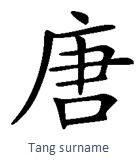 Likewise, in China the woman does not take on the name of her husband. Within this complex naming system, the surname is the first name listed followed by one or two given names. Historically, at marriage, the woman would add the suffix -shi to her name, meaning family or clan. Thus, if Tai Xiang Ting married Han Yu Shin, she would be known as Tai Shi (family of Tai) after marriage, while the family name would be Han. This makes it difficult to link mothers to their children, and unfortunately, many Chinese genealogical records omit the names of wives and daughters and follow only the male line of descent. Also, because of the location of the surname in Chinese names, if they immigrated to the United States their names were confused by immigration officials. Hearing the name Wang Kai Wei, where although Wang was the surname, the migrant official may have listed the surname as Kaiwei instead. The difficulty in understanding the Chinese tones, and in translating from Chinese symbols to a Romanized alphabet, also resulted in a variety of spellings for a single Chinese surname. So, Chan, Chen, Chin, Tan, Tin, Tjin, and Ting could all reference the same name.